Tuesday, 11 August 2026

Royal Succession in Japan

  • Even with President D. Trump and the ongoing Iranian and Ukrainian issues, there are still significant foreign affairs topics that aren’t always highlighted in the news. For instance, I think royal succession is a key area, like Princess Catherine of the United Kingdom, Princess Leonor of Spain and, more importantly, Princess Aiko of Japan. 


    Princess Aiko of Japan 


  • According to the Imperial Household Law of 1947, only male descendants in the male line can inherit the Chrysanthemum Throne. So, even though Princess Aiko is the Emperor’s only child, she’s not legally allowed to inherit the throne. Her cousin, Prince Hisahito, is currently second in line after his father, Crown Prince Akishino.


    The idea of succession has sparked a lot of discussion in Japan. People are wondering if Japan should change its laws to let women inherit the throne. Even though most people in Japan (about 80%) think it would be great to have an empress regnant, the current laws still don’t change.


    This issue is especially important now that Prime Minister Sanae Takaishi has been elected. The Prime Minister doesn’t want to change the law about royal succession, and it seems like it might be because of personal reasons, even though it could have big effects on the world, especially since Japan is becoming more powerful.


    I’d love to hear what you think about this.

  • Monday, 2 March 2026

    Sweden Flies Gripen Fighter Jets


    Sweden flies Gripen fighter jets on offer to Canada as part of NATO mission


    UPPSALA, Sweden --

     As geopolitical tensions rise in many parts of the world, Swedish Armed Forces have six JAS 39 Gripen fighter jets deployed in Iceland.

    This marks a significant milestone. It’s the first time Sweden leads air policing duties in the highly strategic territory since joining NATO in 2024. It’s also an occasion for the Swedes to show off their fighter jets to Canada, and how they fit into NATO operations.

    JAS 39 Gripen fighter jets. (CTV News)

    Denmark is also providing four F-35 fighter jets to the mission.


    Sunday, 1 February 2026

    Governor general to visit Greenland


    Canada's Governor General Mary Simon to visit Greenland in February 

    and attend the opening of Canada's first consulate in Nuuk, the Office of the Governor General said Wednesday.


    According to a press release, Simon's visit will focus on strengthening the close historical and cultural bonds between Inuit in Canada and Greenland.

    The upcoming trip will mark the first visit by a Canadian governor general to Greenland since 1982.

    "The Arctic is stronger when nations work together," Simon was quoted as saying in the release. "Canada's long-standing approach is grounded in close, constructive engagement, supporting stability, respect for sovereignty and the well-being of northern communities."


    Source(s): Xinhua News Agency


    Wednesday, 10 September 2025

    Quotation -- Knowledge


    Dr. Neil de Grasse Tyson


    "One of the great challenges in this world is: 

    Knowing enough about a subject 

    to know that you are right ... 

    but, not enough about a subject 

    to know that you are wrong."


    Monday, 1 September 2025

    Why Schools Pass Students but Fail Society


    Have you ever heard about the surprising situation in our public schools? It seems that one in five Americans can’t even read their own diplomas! Despite spending a lot of money—$16,000 per student each year—we’re still facing this literacy challenge.


    Take Alaysha Ortiz, for instance. She graduated from Hartford Public Schools in the spring of 2024 with honours! She even received a scholarship to the University of Connecticut to study public policy. But here’s the thing: when she was in high school, she had to use speech-to-text apps to help her read and write essays.


    Alaysha’s story is heartbreaking, but sadly, it’s not an isolated case. In Illinois alone, at 24 public schools, not a single student can read at grade level. And nationwide, a staggering 54 per cent of American adults read at or below a sixth-grade level. That’s like, only 46 per cent of American adults could even manage to read a middle-school level of literacy, let alone high school or college.


    We invest so much in education, and yet, we’re still falling behind. Functional literacy is incredibly important. It’s about being able to read and understand various texts, such as forms, instructions, job applications and more. It’s not just about being a skilled reader; it’s also about understanding what the text means. You need to be able to decipher the words and make sense of the information being presented.

    Have you ever wondered about the fascinating world of American historical texts from the Colonial Era? They’re absolutely captivating!


    One of the most popular books from that time was John Bunyan’s ‘Pilgrim’s Progress.’ It was a massive hit, selling millions of copies! Benjamin Franklin even said it was found in almost every colonial home.


    Harriet Beecher Stowe later wrote that ‘Pilgrim’s Progress’ was the second most read book by the common people, after only the Bible. It’s a true classic.


    Here’s something that might surprise you: we spend a lot—$16,000 each year—on public K-12 education for our students. Plus, we’re spending a staggering $857.2 billion annually on public K-12 schools across the country.


    Have you ever noticed how we often skip the sounding-out part when reading? You’re probably reading this sentence without even thinking about how each word sounds. But if we skip that step and don’t learn to sound out words we don’t know or write them phonetically, we’re basically building a shaky foundation for real literacy. Many public school classrooms have been doing this for decades, and it’s not a good idea. It puts students at risk of not being able to read and write properly. 


    Developed with a kind of AI and apologies to Hannah F. Hood from the Epoch Times


    Saturday, 12 July 2025

    Zhuangzi (莊子) 369 -- 286 BC

    "Everyone in the world knows how to seek for knowledge 

    that they do not know, 

    but do not know how to find what they already know."


    Zhuang Zhou commonly known as Zhuangzi Chinese莊子; literally "Master Zhuang"; was an influential Chinese philosopher who lived around the 4th century BCE during the Warring States period, a period of great development in Chinese philosophy, the Hundred Schools of Thought. He is credited with writing—in part or in whole—a work known by his name, the Zhuangzi, which is one of two foundational texts of Taoism, alongside the Tao Te Ching.


    Zhuangzi Dreaming of a Butterfly, by 18th-century Japanese painter Ike no Taiga


    Saturday, 19 April 2025

    The Saab Gripen upsets F-35 supporters in NATO

     On April 6, 2025, Micael Johansson, the CEO of Swedish aerospace giant Saab, confirmed that the company is engaged in talks with Portugal to potentially supply JAS 39 Gripen fighter jets.


    Photo by Sgt Müller Marin


    This event comes amid heightened geopolitical tensions in Europe and a broader debate about the continent’s reliance on American-made military hardware. As Portugal weighs its options, the Gripen emerges as a cost-effective and versatile alternative to pricier platforms like the Lockheed Martin F-35, raising questions about NATO’s future procurement trends and the strategic implications for transatlantic defense cooperation.


    SAAB is, reportedly, in talks with Canada and Portugal over potential Gripen procurement, after both countries expressed unease in recent weeks with their programs to acquire US-produced F-35s.


    Compared to its competitors, the Gripen E/F offers distinct advantages for a nation like Portugal. The Lockheed Martin F-35A, while unmatched in stealth and sensor fusion, comes with a per-unit cost exceeding $80 million and annual maintenance expenses that can strain smaller defense budgets.


    Incidentally a 2023 U.S. Government Accountability Office report noted that only 55 percent of U.S. F-35s were mission-capable at any given time, highlighting the platform’s logistical complexity. 


    The Gripen, by contrast, strikes a balance between advanced technology and affordability, with a flyaway cost of around $40 million per unit and a design that reduces maintenance downtime. Its ability to conduct air-to-air, air-to-ground, and reconnaissance missions makes it a changing-role platform well-suited to Portugal’s multifaceted defense requirements.


    Could this deal mark the beginning of a broader European pivot away from U.S. systems, or will it remain an outlier in a market still dominated by powerful American companies? Only time will tell, but the conversation itself underscores a critical juncture in the evolution of global air power.


    I would put my money on the Saab Gripen. 

    Saturday, 12 April 2025

    Selfish Or Blind


    Without any doubt, this extensive article requires that you secure a comfortable chair, be prepared to read until the final sentence and, regardless of which side of the aisle you inhabit, inherit enormous enrichment.  

    https://nationalpost.com/opinion/jordan-peterson-are-older-liberal-voting-canadians-selfish-or-blind

    Or click here:  selfish or blind

                                                            Acknowledgments to National Post and Dr. J. Peterson

    Saturday, 11 January 2025

    2025 and The Future

     Just visualize the following scenario;

    1- We know Trump and Putin met together during Trump 1 presidency;
    2- They held secret talks for an afternoon which have never been disclosed;
    3- Putin wants Ukraine and more countries in Europe, while Trump wants Canada, Greenland, Panama, and probably parts of Mexico or even Cuba;
    4- Xi Jinping wants Taiwan no later than 2050 and probably other countries in Asia even Australia;
    5- Early in the Trump 2 presidency he gives Ukraine to Putin who will keep NATO out of North America while Trump takes Canada;
    6-  Putin and Trump green-light China to take Taiwan on condition it stays out of Europe and North America.
    7- Under the new world order, everyone is happy and there is peace until one of them wants the whole thing for himself.

    I know many other people think something like this will happen, too.

    John Outram - Valued Contributor 

    Wednesday, 9 October 2024

    A Monopoly

    Permit me to present today's example of monopoly capitalism. 

    Nestlé S.A.

    Nestlé — Nespresso — Nescafe — KitKat — Smarties — Nesquik — Stouffer’s — Vittel — Maggi — L’Oreal — Etc.


    Twenty-nine (29) of the top Nestlé brands each have annual sales of over 1 billion CHF (about US$1.1 billion,  A number of corporate acquisitions including Crosse & Blackwell in 1960, Findus in 1963, Libby's in 1971, Rowntree Mackintosh in 1988, Klim in 1998, and Gerber in 2007.


    (The study of Canada's depleting fresh water reservoirs is astonishing) 


    Wednesday, 27 March 2024

    XB-1 Flight Marks Buildup To Supersonic Test Campaign


    Boom’s ambitious plan to develop a 21st-century supersonic airliner took one step closer to reality on March 22 with the successful first flight of the company’s XB-1 demonstrator—the world’s first privately developed faster-than-sound civil aircraft—at Mojave Air & Space Port, California.  Aviation Week & Space Technology


    Spiritually, I have tried to avoid the use of the word ‘hate’, therefore, I shall just say that I feel an intense dislike for this new US experiment.

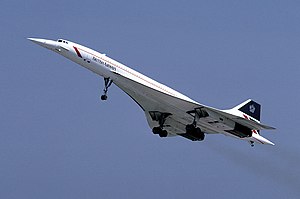
    Fifty-five years ago, in 1969, the first flight of the British Aircraft Corporation Concorde took place, capable of a supersonic speed of Mach 2.04 (1,350 mph).  
    (Note; A British HP-115 experimental demonstrator, similar to the XB-1, flew even earlier in 1961.)

    It is well known that Concorde flew for British Airways and Air France, also, Braniff International Airways, and Singapore Airlines.  Orders for more than 100 Concordes were made by about 16 airlines (Including Air Canada).  But, later, destroyed by US public pressure because of perceived noise.  


    During that period, my home was on the final approach into Heathrow and, even as an experienced aviation enthusiast, of all the aircraft on that path there was nothing so heart-stopping as the bright white Concorde.  And, thus, my intense dislike of US aviation today … unable to build, e.g., a B-737.  

    Just imagine what the Concorde would be today after numerous twenty-first century improvements … notwithstanding the if's and but's of the US aerospace industry swamp.  


    Sunday, 28 January 2024

    Consciousness

     Scientists Believe They’ve Unlocked Consciousness—and It Connects to the Entire Universe

    It’s just a simple quantum wave that can interact with everything that’s ever existed.

    Susan Lahey


    When people discuss consciousness or the mind, the context often feels unclear. Whether consciousness arises in our brains as a result of neuron firing or exists independently, there’s no universally accepted scientific explanation for its origin or location. However, recent research on the physics, anatomy, and geometry of this enigmatic concept is beginning to shed light on its potential form. In essence, we may soon be able to identify a true architecture of consciousness.


    This new work builds upon a theory proposed by Nobel Prize-winning physicist Roger Penrose, PhD, and anesthesiologist Stuart Hameroff, MD, in the 1990s. This theory, known as the Orchestrated Objective Reduction theory, or Orch OR, suggests that consciousness is a quantum process facilitated by microtubules within the brain’s nerve cells.


    Let’s familiarize ourselves with the concept of microtubules. These are protein lattices that form part of the cell’s cytoskeleton, its structural network.


    Penrose and Hameroff proposed that consciousness is a quantum wave that traverses these microtubules. Just as every quantum wave possesses properties such as superposition (the ability to exist in multiple states simultaneously) and entanglement (the potential for two particles separated by vast distances to become interconnected), consciousness exhibits these characteristics as well.


    Despite numerous experts questioning the validity of the Orch OR theory, a group of scientists is dedicated to reviving and advancing this groundbreaking idea.

    To explain quantum consciousness, Hameroff recently stated that it lacks a defined physical size. He drew a parallel to a fractal, a never-ending pattern that can be incredibly small or vast while retaining its properties at any scale. While ordinary states of consciousness, such as awareness of our existence, may seem commonplace, Hameroff explains that heightened states of consciousness arise from quantum-level consciousness capable of being present in multiple locations simultaneously. This means our consciousness can connect or entangle with quantum particles outside our brains, theoretically anywhere in the universe.


    Until recently, scientists could easily dismiss this theory. Attempts to recreate quantum coherence, maintaining quantum particles as part of a wave instead of breaking them down into discrete and measurable particles, were only successful in extremely cold and controlled environments. However, when these particles were removed from these environments, the wave collapsed, leaving behind isolated particles. Since the brain is warm, wet, and mushy, it was believed that consciousness couldn’t remain in superposition within it, and therefore particles within the brain couldn’t connect with the universe.


    However, recent discoveries in quantum biology have challenged this notion. Living organisms, despite not being cold and controlled, utilize quantum properties.


    KNOW YOUR TERMS: QUANTUM BIOLOGY


    Quantum biology is the study of quantum processes within living organisms, such as superposition and quantum entanglement, that actually facilitate biological processes beyond the subatomic level. 

    In photosynthesis, for example, plants use chlorophyll to capture the energy from a photon, or a quantum particle of light. When light hits the plant, it forms an exciton, which carries the energy to the plant’s reaction centre. However, the exciton must navigate the plant’s structures, similar to navigating an unfamiliar neighbourhood en route to a dentist appointment, before it burns all the energy it carries. Scientists now believe that the exciton simultaneously explores all possible paths, a phenomenon known as superposition, to find the optimal path.


    New evidence suggests that microtubules within our brains may be even more adept at maintaining this quantum coherence than chlorophyll. Physicist and oncology professor Jack Tuszynski, PhD, who collaborated with the Orch OR team, recently conducted an experiment using a computational model of a microtubule. His team simulated shining light into a microtubule, similar to how a photon might send an exciton through a plant structure. If the light persisted for a fraction of a second, it indicated quantum coherence.


    Specifically, Tuszynski’s team simulated sending tryptophan fluorescence, or ultraviolet light photons that are invisible to the human eye, into microtubules. After conducting 22 experiments, they observed that the excitations from tryptophan created quantum reactions that lasted up to five nanoseconds. This is significantly longer than what had been anticipated for coherence in a microtubule, spanning thousands of times. Moreover, it provides sufficient time to perform the biological functions required. Tuszynski expressed confidence in this process, stating, “We are actually quite certain that this process lasts longer in tubulin than in chlorophyll.” The team’s findings were published in the journal ACS Central Science earlier this year.

    Tuszynski draws inspiration from similar experiments conducted by scientists at the University of Central Florida. These researchers successfully illuminated microtubules with visible light. In these experiments, researchers observed the re-emission of this light over hundreds of milliseconds to seconds, which aligns with the typical human response time to a stimulus. By shining light into microtubules and measuring the time it takes for them to emit the light, Tuszynski suggests that this process serves as a proxy for the stability of certain postulated quantum states. This, in turn, supports the theory that these microtubules may possess coherent quantum superpositions, potentially associated with mind or consciousness. In essence, Tuszynski proposes that the brain’s temperature and wetness may not be the primary factors preventing consciousness from manifesting as a wave connecting with the universe.


    While these experiments are far from conclusively proving the Orch OR theory, they do provide significant and promising data. In parallel, Penrose and Hameroff continue to push the boundaries of the theory, collaborating with individuals like renowned author and influencer Deepak Chopra to explore expressions of consciousness in the universe that they believe they can identify in the lab using their microtubule experiments. This approach often makes many scientists uneasy.


    Nevertheless, other researchers are exploring the potential architecture of such a universal consciousness. One particularly compelling idea emerges from the study of weather patterns.


    The Architecture of Universal Consciousness


    Timothy Palmer, a PhD in mathematical physics specializing in chaos theory and climate, and a fan of Roger Penrose, presents a compelling perspective. Palmer posits that the fundamental laws of physics must be inherently geometric. He employs Invariant Set Theory to elucidate the workings of the quantum world, suggesting that quantum consciousness arises from the universe operating in a specific fractal geometry “state space.” State space essentially represents the diverse configurations within any system.


    This concept implies that we are trapped in a specific path or trajectory within a cosmic fractal shape shared by other realities that are also stuck in their own patterns. This idea is explored in the final chapter of Palmer’s book, The Primacy of Doubt: How the Science of Uncertainty Can Help Us Understand Our Chaotic World. In it, Palmer suggests that our experience of free will—the ability to make choices and the perception of an external consciousness—may be a result of our awareness of other universes that share our state space.


    The idea begins with a unique type of geometry called a strange attractor. You may have heard of the butterfly effect, the concept that the flapping of a butterfly’s wing in one part of the world could cause a hurricane in another. The term actually refers to a more complex concept developed by the mathematician and meteorologist Edward Lorenz in 1963. Lorenz was attempting to simplify the equations used to predict how a specific climate condition would evolve. He narrowed down the equations to three differential equations that could be used to identify the “state space” of a particular weather system. For instance, if you had a particular temperature, wind direction, and humidity level, what would happen next? Lorenz began plotting the trajectory of weather systems by plugging in different initial conditions into the equations.


    The Lorenz attractor, a set of chaotic solutions to the Lorenz system, resembles a butterfly or figure eight when plotted. Often referred to as the butterfly effect, it serves as a visual representation of chaos.


    Lorenz discovered that even slight variations in initial conditions, such as humidity, temperature, or a mere hundredth of a percent, could lead to vastly different trajectories. In a graph, one trajectory might spiral in one direction, forming loops and spins seemingly at random, while another creates entirely different shapes in the opposite direction. However, as Lorenz plotted these trajectories, he noticed that many of them circulated within the boundaries of a specific geometric shape known as a strange attractor. It was as if these trajectories were cars on a track, capable of going in any direction as long as they didn’t repeat the same path and stayed on the track. The resulting plot, now called the Lorenz attractor, actually resembles a pair of butterfly wings.


    Palmer suggests that our universe might be akin to a single trajectory, a car, on a cosmological state space similar to the Lorenz attractor. When we contemplate “what if” scenarios, we are essentially gaining insights into versions of ourselves in other universes who are also navigating the same strange attractor—essentially, others’ “cars” on the track. This idea also explains our sense of consciousness, free will, and our connection to a larger universe.


    Palmer proposes that our universe might be evolving on specialized fractal subsets of all conceivable states within the state space. If his ideas are correct, he emphasizes the need to examine the structure of the universe on its largest scales, as these attractors reveal a holistic geometry for the universe.


    While Tuszynski’s experiment and Palmer’s theory still don’t provide a definitive explanation for consciousness, they offer a potential clue about its location—the kind of structure that houses it. This suggests that consciousness is not an ethereal, disembodied concept but rather a tangible entity. If consciousness exists somewhere, even if that somewhere is a complex state space, we can potentially find it. This is a significant step forward in understanding the nature of consciousness, a structure houses it. That means it’s not just an ethereal, disembodied concept. If consciousness is housed somewhere, even if that somewhere is a complicated state space, we can find it. And that’s a start. 

    Popular Mechanics